How to Increase Student Engagement on Campus
Student engagement directly drives retention, graduation rates and institutional revenue.
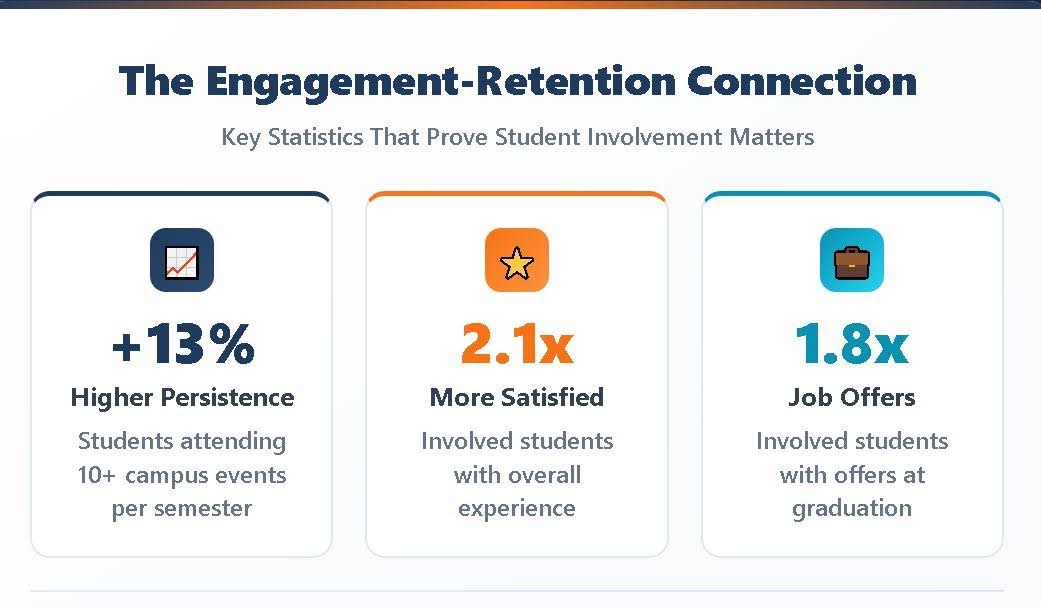
- Students who attend 10+ campus events per semester are 13% more likely to persist.
- Students prefer mobile notifications over email for campus communications.
- Integrated campus engagement tools reduce administrative burden while personalizing outreach at scale.
- Institutions that use unified technology platforms see measurable improvements in student involvement and success.
If your engagement strategy still relies on email blasts and bulletin boards, you're losing students before you even reach them.
Administrators in higher ed shape every aspect of the student experience. The decisions made behind the scenes, from resource allocation to technology investments, directly determine how connected students feel to their institution. For practitioners asking how to increase student engagement on campus, the answer lies in strategic initiatives, cross-department collaboration and purposeful technology integration.
Student engagement affects everything that matters to an institution. Retention rates, graduation outcomes, alumni giving and institutional reputation all flow from how well students connect with campus life. According to the National Student Clearinghouse, persistence rates reached 77.6% in 2024, yet nearly one in four students still leaves before completing their degree. Engaged students are more likely to stay, and disengaged students are at risk of walking away.
Learners are discerning consumers who evaluate their educational investment based on outcomes and experience. Engagement begins before students even apply and continues through graduation into alumni relationships. Colleges and universities that understand this full lifecycle create environments where students feel supported and motivated to succeed.
Why Does Increasing Student Engagement on Campus Matter for Retention?
The connection between engagement and retention is clear. Students who participate in campus activities, connect with peers and feel part of a community persist at higher rates than those who stay on the margins.
Research from Valdosta State University illustrates this relationship. Students attending at least 10 campus events per semester showed 13% higher persistence rates compared to less engaged peers. According to the Ohio State Graduation Survey, students involved in at least one co-curricular activity were:
- 2.1 times more likely to be satisfied with their overall experience
- 1.8 times more likely to have a job offer at graduation, and
- 1.7 times more likely to express interest in graduate school
The financial implications are substantial. When students leave, institutions lose tuition revenue, spend more on recruitment and see their completion metrics decline. Beyond dollars, every student who drops out represents unfulfilled potential and a mission left incomplete.
Emotional well-being plays a role in these outcomes. A report from Gallup and the Lumina Foundation found that 54% of students cite emotional stress as a primary threat to their enrollment status, with 43% pointing to personal mental health reasons. Engagement strategies that build community and belonging address these challenges by creating support networks to help students navigate difficult moments.
What Administrative Strategies Increase Student Engagement on Campus?
Effective engagement requires coordination across every corner of an institution. Isolated efforts rarely produce lasting results. The most successful approaches bring together academic affairs, student services, technology teams and leadership around shared goals.

Using Data to Understand Student Behavior
Administrators can leverage analytics to identify engagement patterns, spot at-risk students early and allocate resources where they matter most. Student Information Systems (SIS) capture valuable data about course registration, academic performance and service utilization. When combined with engagement tracking from campus events and organizations, this information reveals which students are thriving and which need additional support.
The key is moving from reactive to proactive intervention. Rather than waiting for students to fail a class or miss a payment deadline, institutions can reach out when early warning signs appear. A student who stops attending events, misses advising appointments or shows declining grades may be signaling disengagement before they ever consider leaving.
Building Cross-Department Collaboration
Student engagement doesn't live in a single office. Academic departments, student affairs, enrollment services, financial aid and career centers all play essential roles. When these units operate in silos, students experience fragmented support that fails to address their complete needs.
The most effective institutions create cohesive engagement initiatives that span departmental boundaries. Co-curricular programs blend academic content with social connection. Advising integrates career planning with course selection. Communication flows across channels, so students receive consistent messages regardless of which office they contact.
Supporting Diverse Student Populations
Inclusive campus policies ensure that engagement opportunities reach every student population. International students, students with disabilities, first-generation learners, working adults and underrepresented groups each face unique barriers to involvement. Targeted programming, accessible facilities and flexible scheduling help remove these obstacles.
Students who feel valued and seen by their institution engage more deeply and persist at higher rates. The entire campus community is stronger when institutions create spaces where diverse perspectives are welcome.
Which Campus Engagement Tools Drive Student Involvement?
Technology has transformed how institutions connect with students. The right campus engagement tools make it easier to track, personalize and scale.

Student Information Systems as Engagement Hubs
Modern SIS platforms serve as central hubs for non-traditional student management and engagement tracking across the student lifecycle. They integrate with other campus systems to ensure that data flows seamlessly and give staff a complete picture of each student's journey.
Advisors can have more meaningful conversations with students when they can see engagement history alongside academic records. When marketing teams can segment audiences based on involvement levels, they can craft messages that resonate. Leadership is better equipped to make decisions about programming investments when they can view dashboards showing participation trends.
Learning Management Systems (LMS) for Active Participation
LMS platforms facilitate active learning by enabling students to access course materials and collaborate on projects from anywhere. The ability to track progress, receive feedback and connect with peers encourages continuous engagement beyond classroom hours.
Integration between LMS and SIS ensures that academic performance data aligns with engagement tracking. Students who are struggling in courses can receive automated outreach connecting them to tutoring, advising or other support services.
Mobile Apps That Meet Students Where They Are
Research consistently shows that students prefer mobile notifications over email for time-sensitive campus communications. Students spend hours daily on their smartphones, and institutions that fail to reach them through mobile channels miss critical engagement opportunities.
Campus mobile apps allow institutions to:
- Centralize access to events, resources, schedules and support services
- Use push notifications to remind students of deadlines and opportunities
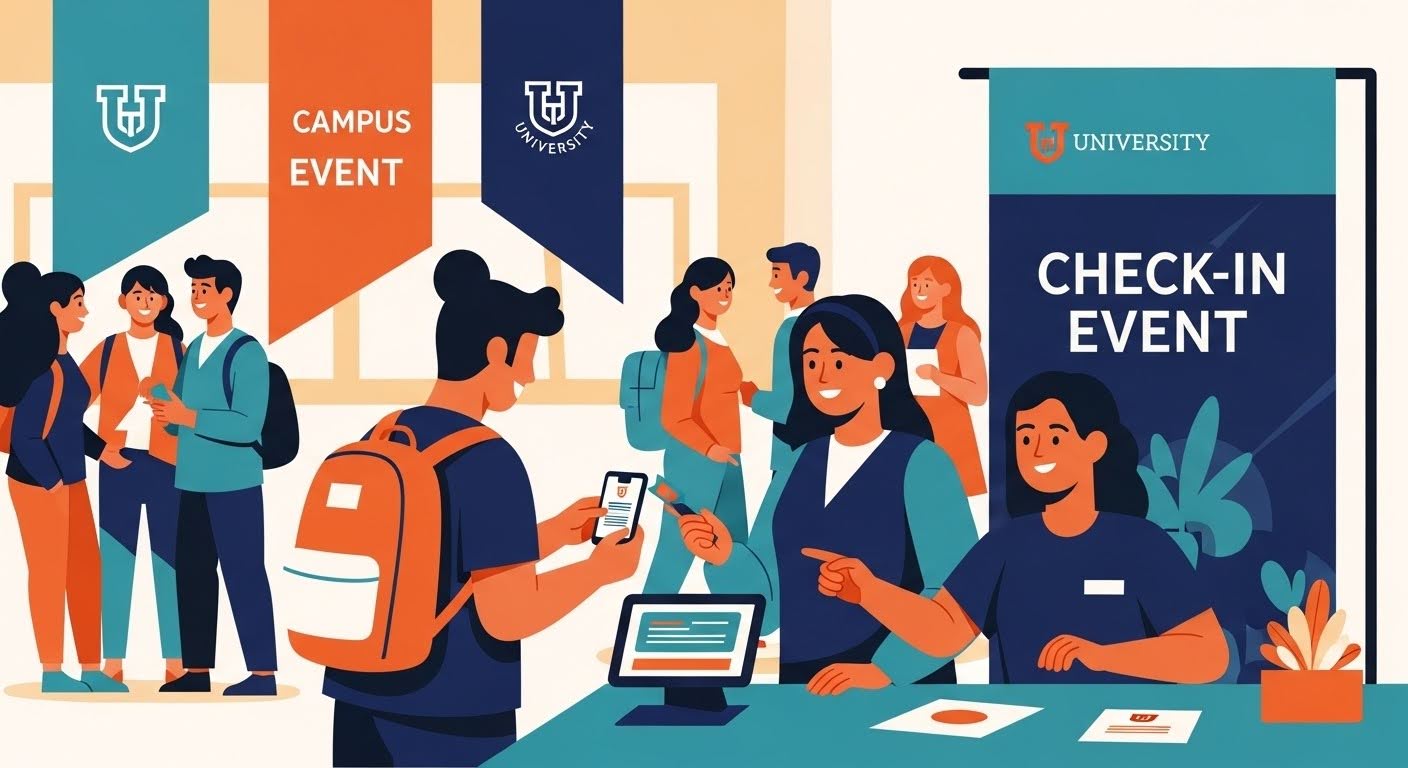
- Streamline check-ins at events and facilities through Digital ID features.
The convenience of mobile access removes barriers that might otherwise prevent participation.
How Do Integrated Technology Platforms Transform Student Engagement?
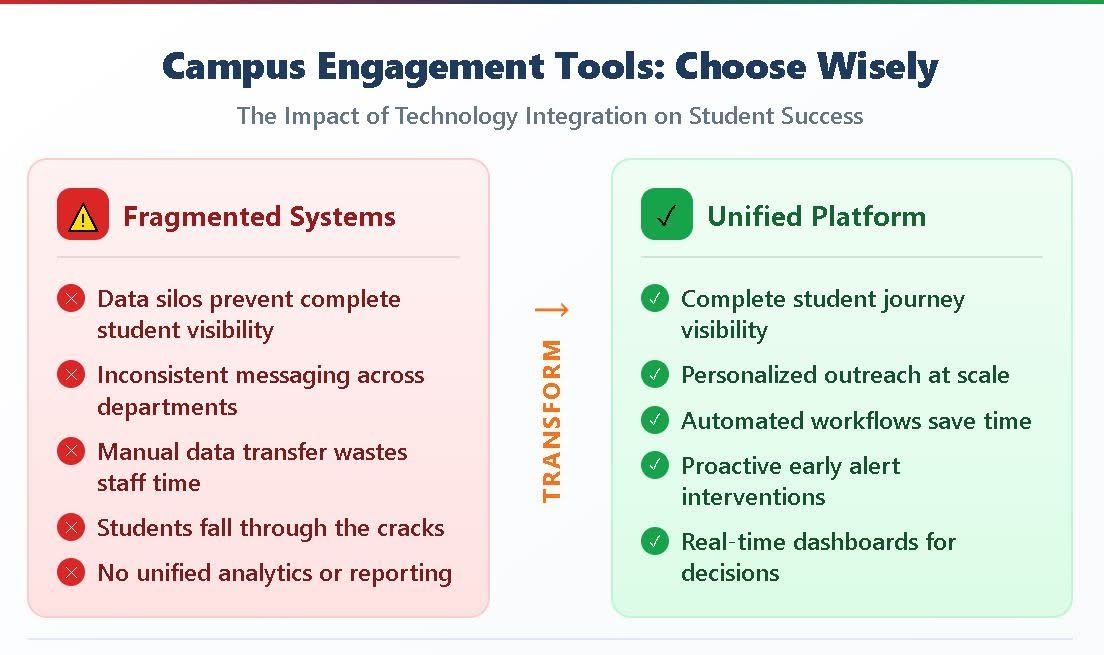
Many institutions operate a patchwork of disconnected tools. Different offices use different systems for email, texting, events, forms and analytics. These tools rarely communicate with each other, which creates data silos and inconsistent student experiences.
The Problem with Fragmented Systems
When a student receives conflicting messages from admissions, financial aid and student affairs, trust erodes. Staff who can't see what communications a student has already received risk overwhelming them with redundant outreach or missing critical touchpoints. If leadership can't access unified reporting, they struggle to demonstrate ROI on engagement investments.
Fragmentation also burdens staff who have to log into multiple systems, manually transfer data and reconcile conflicting records. This consumes time that could be spent on meaningful student interactions.
The Benefits of Unified Engagement Platforms
Integrated platforms bring communication, event management, engagement tracking and analytics into a single ecosystem. Staff work from one interface while students experience consistent, personalized outreach across every channel.
These platforms offer several advantages:
- Personalization at scale: Segment audiences based on major, year, involvement level or custom criteria to deliver relevant messages
- Automated workflows: Trigger outreach based on student actions or milestones without manual intervention
- Real-time dashboards: Monitor engagement metrics across the institution and identify trends as they emerge
- Cross-functional visibility: Give every department access to the complete student picture
AI-Powered Early Alert Systems
Predictive analytics is one of the most powerful capabilities of modern engagement platforms. By analyzing patterns in academic performance, attendance and involvement, these systems identify students at risk of disengagement before obvious warning signs appear.
An advisor might receive notification that a student's engagement has declined, prompting outreach before the student considers leaving. Automated nudges can remind students of resources or deadlines tailored to their specific situation.
What Role Does Mobile-First Communication Play in Student Involvement?
The shift toward mobile-first engagement reflects how students communicate in every other area of their lives. Meeting them on their preferred channels is no longer optional.
SMS as a Primary Engagement Channel
Text messaging achieves remarkable results compared to traditional channels. While email open rates hover around 20%, SMS messages see 98% open rates with 45% response rates. For time-sensitive communications, the disparity between email and text can mean the difference between action and inaction.
Conversational texting goes beyond one-way announcements. Two-way messaging allows students to ask questions, request support and engage in dialogue with staff. This personal connection builds relationships that encourage persistence.
Best Practices for Higher Ed Texting
Effective SMS strategies require thoughtful implementation. Messages should be concise, personalized and action-oriented. Timing matters, as texts sent during peak engagement hours generate stronger responses.
Alignment with TCPA regulations and FERPA requirements ensures that texting programs protect student privacy while maintaining effective communication. The best platforms include built-in safeguards that make compliance straightforward.
7 Proven Student Involvement Tips for Higher Ed
Effective engagement strategies require attention to both big-picture planning and practical execution. These student involvement tips translate research into action:
- Prioritize awareness: Students can't engage with opportunities they don't know exist. Centralized digital calendars, mobile apps and targeted communications ensure visibility.
- Remove barriers to participation: Evaluate every engagement opportunity for accessibility. Consider timing, location, cost and accommodation needs.
- Track and measure involvement: What gets measured improves. Use technology to monitor participation and identify students who may need encouragement.
- Create intervention mechanisms: Establish processes for reaching out to disengaged students before small gaps become insurmountable obstacles.
- Connect engagement to outcomes: Help students understand how involvement builds skills and experiences that matter for their careers.
- Leverage peer influence: Engaged students encourage other students. Train student leaders and ambassadors to promote involvement within their networks.
- Allocate appropriate resources: Engagement initiatives require investment. Ensure that staffing, technology and programming budgets reflect institutional priorities.
How Can Gamification Increase Campus Engagement?
Gamification applies game design elements to non-game contexts, and it has proven remarkably effective in higher ed settings. Points, badges, leaderboards and rewards tap into intrinsic motivation and create positive reinforcement for student engagement.
Badges and Achievement Systems
Digital badges recognize student accomplishments in co-curricular activities. Students who complete leadership training, attend a certain number of events or participate in community service can earn badges that appear on co-curricular transcripts. These visible achievements motivate continued participation while documenting skill development.
Coastal Carolina University created "Society 1954," an honors society for student leaders who complete 25 co-curricular experiences tracked through their engagement platform. This recognition and exclusivity encourage students to pursue involvement goals.
Points and Leaderboards
Point systems assign value to different engagement activities, creating friendly competition among students. Leaderboards display top participants, inspiring others to increase their involvement. Some institutions tie points to tangible rewards like campus store credits, priority registration or special event access.
The University of Kentucky's "UK Invests" program deposits actual money into student accounts when they participate in wellness activities, financial education courses and career center events. Students can earn up to $500 per academic year through this innovative incentive system.
What Are Personalized and Proactive Engagement Strategies?
Scaling personalized outreach requires strategic use of technology and thoughtful planning. The goal is to make every student feel individually supported while efficiently reaching thousands.
Web Experience Optimization
Institution websites are the primary digital touchpoints for prospective and current students. A well-designed, user-friendly site enhances engagement by providing easy access to resources, programs and support services. Interactive features like chatbots, virtual tours and personalized content recommendations create dynamic experiences that static pages can't match.
Mobile optimization is essential given student preferences for smartphone access. If a site loads slowly or displays poorly on mobile devices, users become frustrated, which undermines engagement goals.
Digital Events Calendar Management
A centralized, searchable events calendar acts as a hub for campus activities. Attendance increases when students can easily discover events that match their interests. Integration with mobile apps enables push notifications about upcoming opportunities.
The calendar should aggregate events from across departments, student organizations and academic units. A single source of truth prevents the confusion that results when different groups maintain separate listings.
Intervention Mechanisms for Disengaged Students
Not every student will proactively seek engagement opportunities. Some need encouragement, guidance or support to overcome barriers. Automated reports can identify students with low involvement levels and enable targeted outreach from advisors or student affairs staff.
Effective intervention starts with understanding why a student is not engaging. Work schedules, family responsibilities, financial stress, mental health challenges and lack of awareness all require different responses. Personal conversations uncover root causes and open doors to appropriate support.
Frequently Asked Questions
What is the most effective way to increase student engagement on campus? The most effective approach combines multiple strategies, including:
- Integrated technology platforms that enable personalized communication
- Data-driven identification of disengaged students
- Accessible programming that reaches diverse populations, and
- Institutional commitment reflected in resource allocation
No single tactic works in isolation, but mobile-first communication through SMS has shown strong results.
How do campus engagement tools improve student retention? Campus engagement tools improve retention by making it easier to track student involvement, identify early warning signs of disengagement and deliver timely interventions. When integrated with Student Information Systems (SIS), these platforms give advisors and staff complete visibility into each student's journey. Automated workflows ensure that no student falls through the cracks, while personalized outreach builds the connections that motivate persistence.
What technology integrations matter most for student engagement? The most important integrations connect Student Information Systems (SIS), Learning Management Systems (LMS), communication platforms and engagement tracking tools. This integration eliminates data silos, enables personalized messaging based on complete student profiles and provides unified analytics for decision-making. Mobile app integration is essential given student preferences for smartphone-based communication.
How can institutions effectively measure student engagement? Effective measurement combines quantitative metrics with qualitative feedback. Track event attendance, organization membership, app usage, communication response rates and academic performance. Correlate this engagement data with retention and graduation outcomes to demonstrate impact. Use regular surveys and focus groups to provide context that numbers alone can't capture, and implement dashboard tools to make this data accessible to staff across the institution.
Building Lifelong Engagement Across the Student Lifecycle
Student engagement doesn't end at graduation. Alumni who feel connected during their college years remain connected afterward. They’re more likely to contribute through mentorship, philanthropy and advocacy. The strategies and technologies that engage current students lay the groundwork for lifelong relationships.
Institutions that excel at engagement recognize that every touchpoint matters. From the first website visit through commencement and beyond, consistent attention to student experience builds the connections that define institutional success.
Modern Campus understands these challenges and has built solutions specifically for institutions seeking to improve engagement throughout the learner-to-earner lifecycle. Our platform integrates the campus engagement tools, communication capabilities and analytics that students and staff need. Request a demo to see how we can help your institution create lasting student connections.
Last updated: April 8, 2026