Is SMS Where Student Engagement Strategies Should Focus?
How Text Messaging Fosters Connection Between Students and the Institution
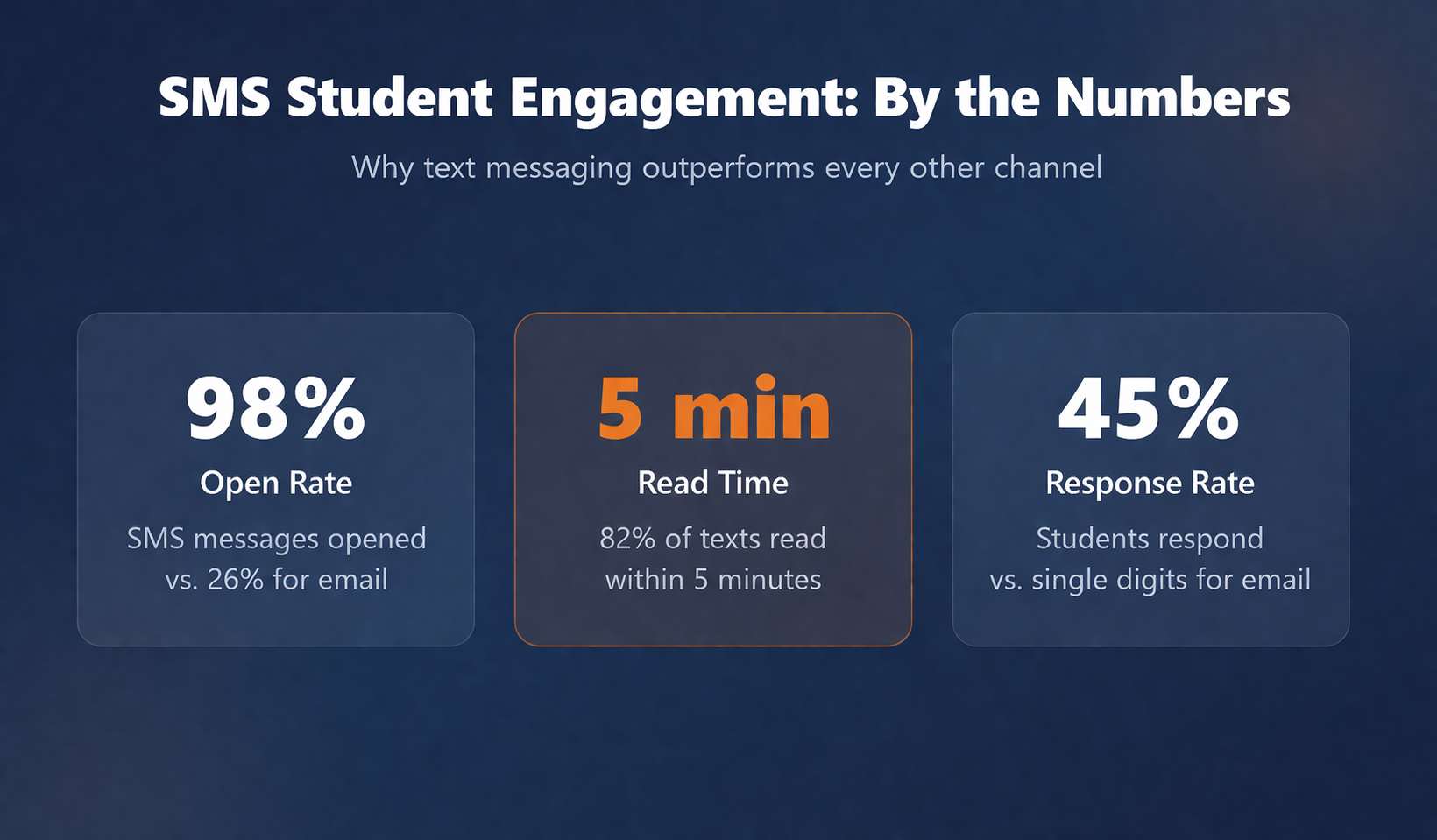
SMS delivers 98% open rates versus 26% for email, making texting a powerful tool for reaching students where they actually pay attention.
- Text messages are read within five minutes on average, while emails languish in crowded inboxes.
- Institutions that use strategic SMS see higher enrollment completion rates and stronger retention outcomes.
- SMS works best as part of an omnichannel approach, not as a replacement for other communication channels.
Knowing when NOT to text is just as important as knowing when to send.
Engaging students has never been more critical for institutions striving to improve satisfaction, retention and overall success. Students who feel connected and motivated by their educational experience are more likely to stay committed to their studies and reach their academic goals. With national retention rates reaching 83.7%, institutions are searching for communication strategies that actually break through to distracted learners.
An SMS student engagement strategy offers something other channels struggle to deliver: immediacy and attention. Nearly all college students own smartphones and spend hours on their devices daily, so text messaging provides a direct line to the people you're trying to reach. But effective engagement requires more than blasting text messages to your entire database. It demands strategy, compliance awareness and an understanding of when SMS shines and when other channels work better.
Why Does SMS Work So Well for Student Engagement?
It comes down to a simple behavioral reality: students live on their phones, and they treat text messages differently than other forms of communication. Institutions that understand these dynamics can craft an SMS student engagement strategy that resonates rather than annoys.
How Do SMS Open Rates Compare to Email?
Text messages achieve open rates around 98%, while email hovers between 20% and 26%. Even more striking, 82% of consumers check their text notifications within 5 minutes of receiving a message, and nearly a third check within 60 seconds. Compare that to email, where messages often sit unopened for hours or get buried beneath promotional clutter.
Response rates show an even wider gap. SMS campaigns see average response rates of 45%, while email typically generates responses in the single digits. When you need students to take action on a deadline, confirm attendance at an event, or complete a missing enrollment step, those response rates matter enormously.
What Makes Text Messaging the Preferred Channel for Students?
College-aged students have grown up with instant, conversational digital communication. They expect the same responsiveness from their institutions that they get from friends and family.
The immediacy of text messages creates opportunities that email can't match. A reminder about tomorrow's registration deadline lands differently when it arrives as a text versus when it joins dozens of unread emails. Students process text messages as personal and urgent, while emails feel institutional and ignorable. Higher ed SMS leverages this psychological reality to create meaningful touchpoints throughout the student journey.
What Are the Key Benefits of an SMS Student Engagement Strategy?
Beyond impressive open rates, text messaging delivers tangible benefits that support student success and institutional goals. The key lies in using SMS strategically rather than treating it as another broadcast channel.
How Does Timely Communication Improve Student Outcomes?
Speed matters in student support. When a student struggles with a financial aid form or misses a course registration deadline, delayed communication can mean the difference between enrollment and dropout. SMS enables institutions to send timely feedback and reminders that reach students in minutes rather than hours.
Consider summer melt, that frustrating period when accepted students fail to follow through with enrollment. Institutions that use strategic text messaging report improvements in enrollment completion rates because they can nudge students through each step of the process in real time. A quick text reminding a student to submit their housing deposit carries more weight than an email that might not be opened until after the deadline passes.
Why Does Personalization Matter for Higher Ed SMS?
Generic mass messages get ignored regardless of the channel. Personalization makes students feel seen and understood. Unlike broad email blasts, SMS can be customized to address individual needs, academic status and specific circumstances.
A student might receive a text congratulating them on their recent academic success or reminding them of resources available for a challenging course. These personal touches foster a sense of belonging and encourage students to stay engaged with their studies.
Institutions like GEAR UP Kentucky have successfully used text messaging to engage thousands of students and their families, demonstrating how personalized SMS builds educational relationships at scale.

How Can Texting for Engagement Support Enrollment and Retention?
The connection between communication and retention is well documented. Students who feel supported and informed are more likely to persist through challenges and remain enrolled. SMS provides a direct channel to deliver that support when students need it most.
Text messaging works across the entire student lifecycle. During recruitment, prospective students receive event invitations and application reminders. Once enrolled, students get deadline alerts, nudges for advisory appointments and campus event notifications. After graduation, alumni stay connected through targeted campaigns. Institutions that use conversational text messaging platforms can integrate their CRM or SIS data to segment audiences and build tailored communications using smart targeting, ensuring the right message reaches the right student at the right time.
When Should You NOT Use SMS in Higher Ed?
Knowing when to text is important. Knowing when not to text might be even more critical. An SMS student engagement strategy works best when institutions understand its limitations and respect both regulations and student preferences.
What Compliance Requirements Limit Higher Ed SMS?
Several regulations govern how institutions can use text messaging, and violations carry serious consequences. The Telephone Consumer Protection Act (TCPA) requires explicit consent before sending text messages, even for nonprofit educational institutions. The Family Educational Rights and Privacy Act (FERPA) restricts what information can be shared via text, since SMS is not considered a secure channel for personally identifiable information.
Recent updates to A2P (Application-to-Person) Campaign guidelines have tightened requirements further. Only students who have explicitly opted in to receive SMS messages may be contacted via text. Purchased contact lists or "cold leads" who have not expressed interest in your institution should never receive text messages, regardless of how valuable the information might seem.
What Types of Messages Should Never Be Sent via SMS?
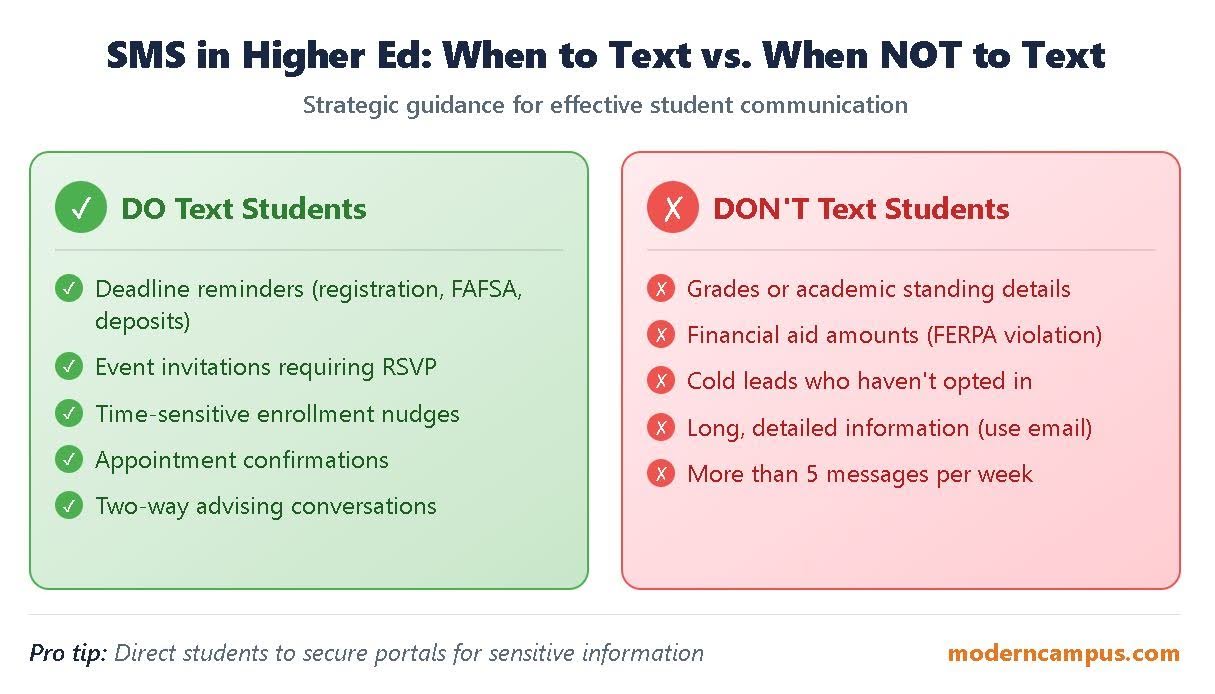
Certain communications simply do not belong in text format. Sending personally identifiable information through SMS can violate FERPA regulations and expose students to security risks. Details about specific grades, financial aid amounts, disciplinary matters or health records should never appear in a text message.
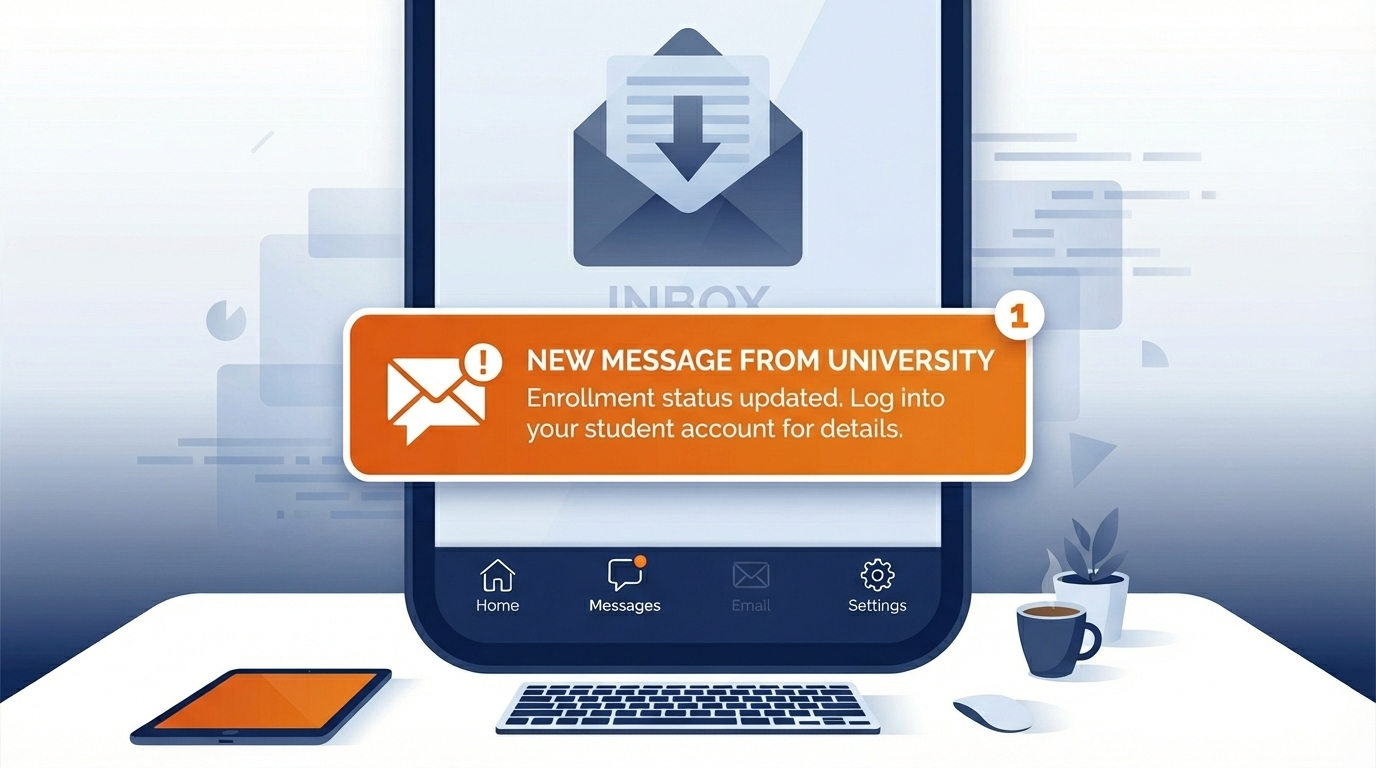
Instead of texting sensitive details, institutions should direct students to secure portals where they can access protected information. A text might say, "Your financial aid status has been updated. Log in to your student portal to view details," rather than including specific dollar amounts or eligibility information.
How Often Is Too Often for Student Texts?
Over-messaging is one of the fastest ways to drive opt-outs and damage your SMS program's effectiveness. Best practices suggest limiting initial text messages to a manageable frequency that avoids overwhelming students. Many institutions cap outreach at around five messages per week to prevent opt-outs and maintain engagement quality.
Students are bombarded with notifications daily, so frequency fatigue sets in quickly. Save texting for communications with clear calls to action and genuine urgency: deadline reminders, event RSVPs or time-sensitive updates. Routine announcements and lengthy informational content belong in email.
How Can Institutions Build a Comprehensive Higher Ed SMS Strategy?
Effective texting for engagement does not exist in isolation. The most successful institutions position SMS as one component of a broader, integrated communication approach that meets students where they are across multiple channels.
What Does an Omnichannel Approach Look Like?
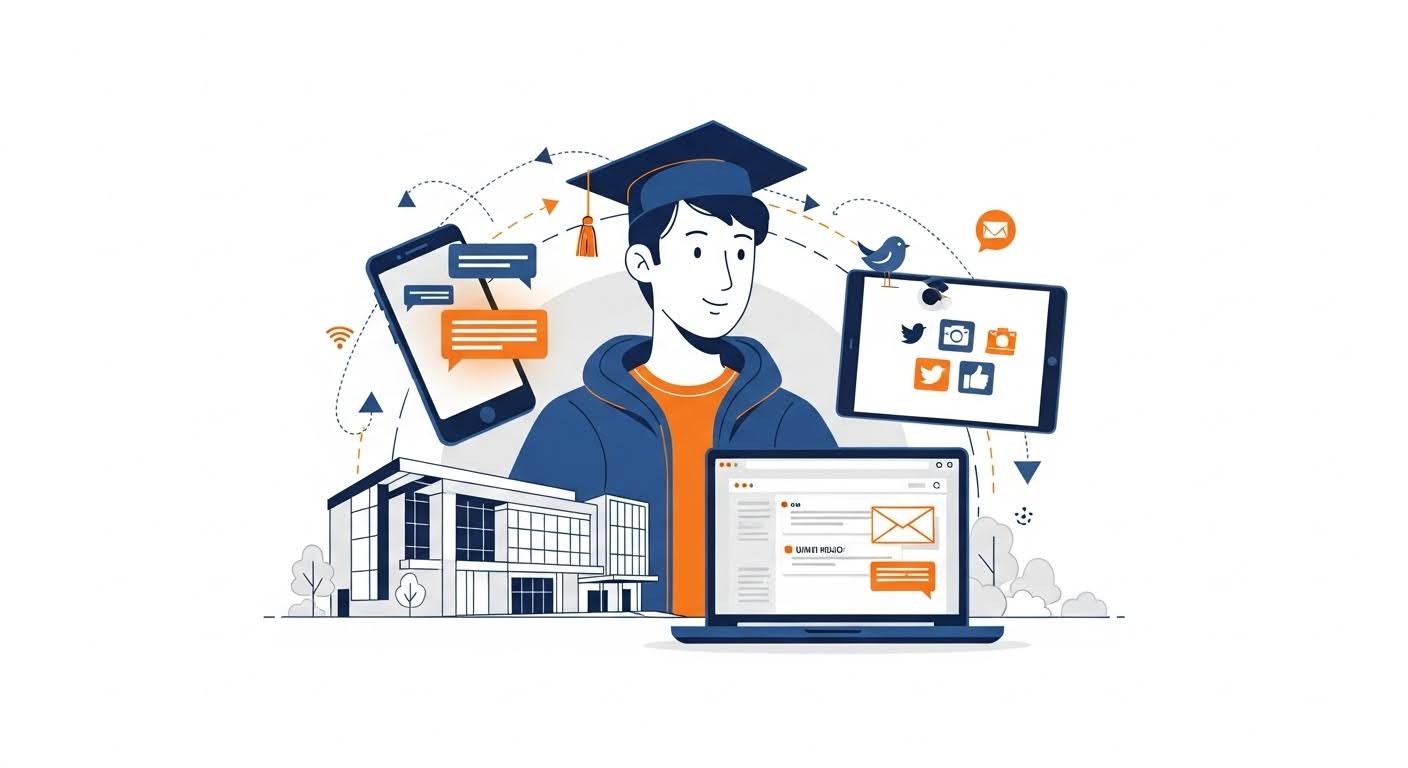
Modern students engage with institutions through numerous touchpoints: email, mobile apps, social media, learning management systems and in-person interactions. Each channel serves a unique purpose, and SMS excels at short, targeted messages with clear calls to action.
Consider how different channels work together:
- Email handles detailed information and long-form content.
- Mobile-friendly portals provide easy access to key services like course registration and academic progress tracking.
- Social media fosters community and campus culture.
- SMS delivers the urgent nudges that prompt immediate action.
When these channels work in harmony, students receive consistent, personalized communication that strengthens their connection to the institution.
What Features Should Institutions Look for in SMS Platforms?
Higher ed SMS platforms should offer specific capabilities that support student success:
- Two-way conversational messaging that allows students to respond and engage in dialogue
- Integration with existing SIS and CRM systems for personalized, data-driven communication
- Automated workflows that trigger messages based on student behavior or status changes
- Compliance tools that manage opt-ins, opt-outs and consent documentation
- Analytics and reporting to measure campaign effectiveness and refine strategies
The right platform transforms SMS from a simple notification tool into a genuine engagement channel that supports students throughout their educational journey.
What Additional Strategies Complement Texting for Engagement?
While SMS delivers impressive results, institutions should not rely on any single channel. Effective student engagement requires a multifaceted approach that recognizes diverse student preferences and learning styles.
Extracurricular activities, including clubs, sports and leadership opportunities, build relationships and support networks that strengthen retention. Blended learning models that combine online and in-person options offer flexibility for non-traditional students balancing work, family and education. Career pathways programs help students connect their academic experience to professional outcomes.
Technology amplifies all of these efforts. Personalized learning tools, dynamic communication strategies and flexible course scheduling create environments where students feel supported and empowered. Institutions that combine human connection with technological innovation see the strongest engagement outcomes by meeting learners where they are.
Frequently Asked Questions
What is an SMS student engagement strategy? An SMS student engagement strategy is a planned approach to using text messaging for communicating with students throughout their educational journey. It includes defining when and how to send messages, segmenting audiences for personalization, ensuring compliance with regulations like TCPA and FERPA and integrating texting with other communication channels. Effective strategies use SMS for time-sensitive reminders, enrollment nudges and two-way conversations rather than treating it as another broadcast tool.
What should institutions avoid when texting students? Institutions should never send personally identifiable information via SMS, as this can violate FERPA regulations. They should avoid texting students who have not explicitly opted in, messaging purchased contact lists or sending messages so frequently that students feel overwhelmed. Complex communications requiring detailed explanation belong in email or other channels rather than text format.
Can SMS improve student retention rates? Yes, strategic SMS communication supports retention by keeping students informed, connected and engaged. Timely reminders about deadlines, personalized outreach to at-risk students and two-way conversations all contribute to stronger persistence. Institutions using comprehensive texting strategies report improvements in enrollment completion and semester-to-semester retention.
Create a Student Engagement Strategy That Actually Works
Building meaningful connections with students requires more than good intentions. It demands the right tools, the right strategy and the right partner. Text messaging offers remarkable potential to reach students in moments that matter, but realizing that potential requires platforms built specifically for higher ed's unique needs and compliance requirements.
Modern Campus empowers institutions to attract, engage and retain learners for life through solutions designed for the entire learner-to-earner lifecycle. Book a demo to see how conversational text messaging can strengthen your engagement strategy.

Last updated: December 12, 2024